Not Available


Society for Pediatric Radiology – Poster Archive
Final ID: Poster #: SCI-063
Abusive Head Trauma: A Retrospective Study
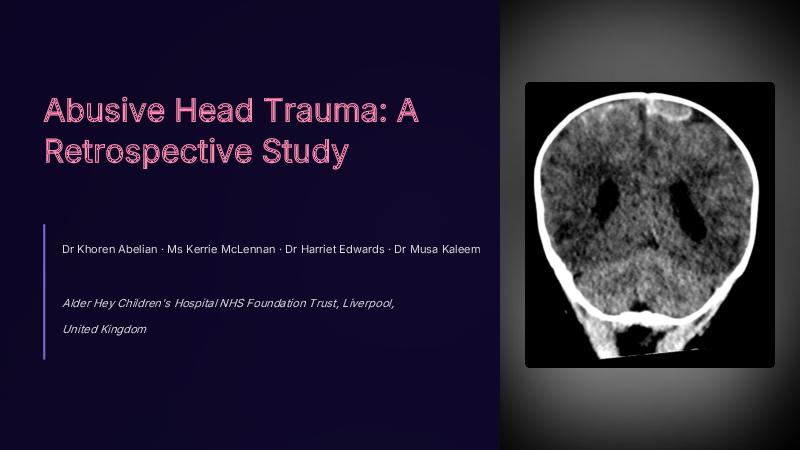
Purpose or Case Report: Abusive head trauma (AHT) is the leading cause of death in physical child abuse, predominantly affecting infants under two years. Early recognition of injury patterns inconsistent with reported mechanisms is critical for safeguarding and clinical management. This study reviewed neuroimaging findings in children under two presenting with head injury or altered neurological behaviour, focusing on the distribution and laterality of intracranial haemorrhage.
Methods & Materials: We performed a retrospective review of all children under two who underwent acute brain imaging at a tertiary paediatric centre between August 2018 and November 2024 for head injury or unexplained neurological symptoms, including lethargy, seizures, collapse, or reduced consciousness. Cases were categorised as unexplained or accidental based on the plausibility of the reported mechanism and imaging findings. For suspected inflicted injuries, outcomes of safeguarding investigations were reviewed. Cases were excluded if only MRI was performed locally following patient transfer from other hospitals, or cases of repeat CT imaging.
Results: A total of 382 cases were identified: 148 (38.7%) unexplained and 234 (61.3%) accidental. Among unexplained cases, 13 had intracranial haemorrhage—six bilateral (one with fracture) and seven unilateral (three with fracture). All six bilateral cases were confirmed AHT; three had associated spinal pathology, two had retinal haemorrhages visible on MRI along with hypoxic–ischaemic injury, and one child died prior to further imaging. Of the unilateral haemorrhages, three were confirmed AHT, with two showing positive spinal or skeletal findings. In the accidental group, nine had both skull fracture and haemorrhage, six had haemorrhage without fracture, and 23 had isolated fractures. In this cohort only two bilateral haemorrhages occurred, both with clear medical explanations following neurosurgical intervention. The remaining accidental cases had normal CT or incidental findings.
Conclusions: Bilateral intracranial haemorrhages in infants are rare in accidental trauma. In the absence of a plausible explanation, they strongly suggest AHT. The presence of spinal pathology, retinal haemorrhages, or skeletal injuries further supports the diagnosis. Radiologists play a pivotal role in recognising these imaging patterns and correlating them with clinical and safeguarding information to ensure timely identification and protection of vulnerable children.
Methods & Materials: We performed a retrospective review of all children under two who underwent acute brain imaging at a tertiary paediatric centre between August 2018 and November 2024 for head injury or unexplained neurological symptoms, including lethargy, seizures, collapse, or reduced consciousness. Cases were categorised as unexplained or accidental based on the plausibility of the reported mechanism and imaging findings. For suspected inflicted injuries, outcomes of safeguarding investigations were reviewed. Cases were excluded if only MRI was performed locally following patient transfer from other hospitals, or cases of repeat CT imaging.
Results: A total of 382 cases were identified: 148 (38.7%) unexplained and 234 (61.3%) accidental. Among unexplained cases, 13 had intracranial haemorrhage—six bilateral (one with fracture) and seven unilateral (three with fracture). All six bilateral cases were confirmed AHT; three had associated spinal pathology, two had retinal haemorrhages visible on MRI along with hypoxic–ischaemic injury, and one child died prior to further imaging. Of the unilateral haemorrhages, three were confirmed AHT, with two showing positive spinal or skeletal findings. In the accidental group, nine had both skull fracture and haemorrhage, six had haemorrhage without fracture, and 23 had isolated fractures. In this cohort only two bilateral haemorrhages occurred, both with clear medical explanations following neurosurgical intervention. The remaining accidental cases had normal CT or incidental findings.
Conclusions: Bilateral intracranial haemorrhages in infants are rare in accidental trauma. In the absence of a plausible explanation, they strongly suggest AHT. The presence of spinal pathology, retinal haemorrhages, or skeletal injuries further supports the diagnosis. Radiologists play a pivotal role in recognising these imaging patterns and correlating them with clinical and safeguarding information to ensure timely identification and protection of vulnerable children.
More abstracts on this topic:
Abusive Head Trauma or Sutural Variant? Common Calvarial Sutural Variations and Pediatric Skull Fracture Patterns: A Primer for Trainees
Mousa Abeer, Ray Alyxandra, Halderman Kelly, Pfeifer Cory
Prevalence of Abuse and Additional Injury in Young Children with Rib Fractures as Their Presenting InjuryBrennan Brian, Henry M Katherine, Altaffer Ana, Wood Joanne
Poster____SCI-063.pdf
Comments
We encourage you to join the discussion by posting your comments and questions below.
Presenters will be notified of your post so that they can respond as appropriate.
This discussion platform is provided to foster engagement, and stimulate conversation and knowledge sharing.
Please click here to review the full terms and conditions for engaging in the discussion, including refraining from product promotion and non-constructive feedback.
You have to be authorized to post a comment. Please,
Login or
Signup.
Please note that this is a separate login, not connected with your credentials used for the SPR main website.
Rate this abstract
(Maximum characters: 500)
Please note that this is a separate login, not connected with your credentials used for the SPR main website.